
The Rise of Home-Based F&B in Singapore: A New Era of Culinary Entrepreneurship

Updated: May 6
Singapore’s F&B market is not simply shrinking. It is restructuring.
Over the last three years, the sector has continued to produce new businesses. However, the economics of running a physical outlet have become harder to sustain. At the same time, home-based and micro F&B brands have gained momentum. These brands can start lean, focus tightly, and build demand digitally before taking on the weight of a full retail operation.
A key caveat is important: Singapore does not officially publish a year-by-year count of home-based food businesses. These operators generally do not need an SFA licence if they stay within the allowed rules under the home-based business framework. This means the comparison between licensed physical F&B and home-based F&B must use official closure and opening numbers on one side, and market signals and case studies on the other.
The Current Landscape of Physical F&B
Recent figures reported from ACRA data show that in 2023, about 3,616 food businesses opened while 2,748 ceased operations. In 2024, 3,791 opened and 3,047 closed. In 2025, 4,100 opened and 3,148 closed.
This means closures rose from 2,748 in 2023 to 3,148 in 2025, an increase of roughly 14.6% over two years. From 2023 to 2024 alone, closures climbed about 10.9%, followed by another 3.3% increase in 2025. In short, physical F&B is still being created, but more operators are struggling to survive long enough to scale.
MTI’s broader position supports this view: Singapore’s F&B industry has continued to grow over the longer term, with the number of F&B entities increasing 42% from 2015 to 2025. However, it remains a highly competitive sector shaped by low entry barriers, changing consumer preferences, and a high rate of churn.
The Emergence of Home-Based and Micro F&B Brands
There is no full official yearly count for home-based food businesses, but the directional evidence is strong. CNA reported that more than 150 F&B businesses were operating out of residential properties as of June 2025. Additionally, The Straits Times reported that the home-cafe discovery platform Acuppa expanded from just 5 listed businesses in 2024 to 523 by December 2025. While this is not a national census, it clearly shows a rapid rise in consumer-facing visibility for home-based and micro F&B brands.
This is the real shift in Singapore F&B: not fewer food businesses overall, but more businesses choosing to validate demand through smaller, more focused formats before committing to high-overhead retail.
Physical F&B Outlet vs. Home-Based Online F&B
| 🏪 Physical F&B Outlet | 🏠 Home-Based Online F&B |
|----------------------------|-------------------------------|
| Advantages | Advantages |
| Better ability to handle larger demand | Low operating cost and low entry barrier |
| Stronger walk-in conversion | Strong product specialization |
| Can generate extra revenue from service charge, upselling, and dine-in add-ons | Easier to adapt to bespoke, made-to-order, or limited-run products |
| Stronger physical brand presence | Can build strong customer loyalty through uniqueness and founder connection |
| Fits mainstream dining behaviour | Good fit for niche-focus strategies |
| Better geo-location advantage | More aligned with e-commerce and social-commerce behaviour |
| Higher transaction frequency potential | Lower financial risk while validating demand |
| Better suited for team service, group dining, and broader menu engineering | More flexibility in testing products before committing to a retail outlet |
| Disadvantages | Disadvantages |
| Strong manpower dependency, which is especially challenging in Singapore’s food services sector today | Limited production and order capacity |
| High rental and operating cost | Harder to maintain stable fulfilment during surges |
| More complex workflow and supervision needs | Lower visibility without strong digital marketing |
| Vulnerable to dine-out fatigue, price sensitivity, and changing consumer habits | Easier for competitors to copy the product |
| Higher financial exposure during low-demand periods | Cannot operate like a full-scale caterer from home under Singapore rules |
Why Home-Based F&B Succeeds: Focus Beats Sprawl
One of the biggest strengths of home-based and micro F&B businesses is hyper-focus.

A small operator does not need to be everything to everyone. In fact, the opposite is often true. The smaller the business, the more powerful it can be when it focuses on a very specific product, a very specific experience, and a very specific customer group. This is where many large brands struggle. Bigger operators usually need broader menus, larger staffing structures, longer opening hours, and more standardized operating models. Micro businesses can do the opposite: they can go deep instead of wide.
That vertical focus matters because it helps a small brand sharpen four things at once:
Product quality
Consistency
Production efficiency
Brand memorability
When a business only does a few things, it can often do them better.
Kohpan: A Strong Example of This New F&B Model
A good example is Kohpan Japanese Bakery.
Kohpan gained attention in Singapore as a tiny home-based shio pan venture, run by siblings who did not come from traditional F&B backgrounds. In early 2026, 8days described Kohpan as a home-based shio pan business operating from an 80 sq ft standalone structure in the Springleaf area, drawing long queues and strong online attention. Kohpan’s own website shows the same focus clearly: it specializes in Japanese shio pans with a signature crispy bottom rather than trying to sell a broad bakery menu.

That is exactly the edge that many micro F&B businesses have over larger competitors.
Kohpan did not try to become a full-line bakery from day one. It built popularity through a hyper-focused product range, a recognizable signature, and strong execution. Instead of spreading attention across dozens of SKUs, it concentrated customer demand around a narrow, high-interest product format. That kind of clarity is powerful in today’s market because it gives customers one simple reason to remember the brand.
And when that focus is executed well, it can create something even more valuable than just sales: it can create a fan group.
Kohpan’s growth trajectory suggests exactly that. Public reporting shows that the business opened around August 2025, first operating from home before moving into a tiny landed-site setup near Springleaf. By March 2026, it had already expanded to a second outlet in Kovan. The brand also continues to push pre-orders actively, which is a sign of a demand-led, operationally disciplined model rather than a footfall-dependent one.

In other words, Kohpan reflects what many large F&B operators find hard to replicate: a narrow product obsession, a tight production model, and a loyal customer following built around a very specific niche.
Why This Works for Small and Micro Brands
This is where small and micro F&B operators often outperform larger brands.
A larger business usually competes through scale, location coverage, manpower, and broad market reach. But a micro business can compete through:
Sharper product identity
Faster menu refinement
Closer founder involvement
Stronger perceived authenticity
Tighter community-style customer relationships
A vertically focused model gives the brand room to find a niche and dominate that niche. Once customers begin to associate the brand with one signature product or one very distinctive experience, the business becomes more memorable, more shareable, and more defensible.
That is part of the reason why some of the most interesting emerging F&B names in Singapore are not coming from large chains. They are coming from operators that start small, stay focused, and build demand around something highly specific.
The Pressure on Physical Shops
While micro brands can start lean, physical outlets face a much tougher cost structure from day one.
Retail rents continued rising, with URA data showing retail rentals up 0.5% in 2024 and 1.9% in 2025. Labour costs also continued increasing, including under the Progressive Wage Model for food services. On top of that, restaurant sales have shown weakness in parts of the market: SingStat reported that restaurant sales fell 7.5% year on year in April 2024, while categories like food caterers performed much better.
This tells us something important. Consumer demand for food has not disappeared, but the format of demand is changing. Consumers are becoming more selective, more value-conscious, and more willing to follow niche brands online rather than defaulting to the nearest mainstream physical outlet.
That makes life harder for many traditional F&B businesses, especially those with broad menus, average differentiation, and heavy fixed costs.
Success and Failure in Home-Based F&B
Home-based F&B succeeds when it gets three things right:
1. A Highly Focused Product
A signature item is easier to refine, easier to market, and easier for customers to remember.
2. Lean Fulfilment
Pre-orders, limited drops, and small-batch production reduce waste and protect margins.
3. A Strong Brand Story
Customers are more likely to support a micro brand when it feels authentic, personal, and distinct.
But home-based F&B also fails when founders assume low entry cost automatically leads to long-term viability.
Common failure points include:
Inability to scale production
Inconsistent quality
Overdependence on social media buzz
Poor fulfilment discipline
Weak repeat-customer retention
A home-based model is excellent for proving demand, but it is not automatically a permanent advantage unless the business builds systems around quality, ordering, fulfilment, and customer engagement.
From Home-Based Food Business to Scalable Workflow
This is where successful micro brands need more than just a good product. They need operating systems that let them stay small-business nimble while becoming more structured.
In Kohpan’s case, that matters because its model is naturally suited to efficient order orchestration: a focused menu, strong pre-order demand, and a fulfilment workflow that benefits from speed and clarity. Compared with many larger brands that are burdened by more complex operations, a business like Kohpan can stay fast and clean when its tech stack matches its model.

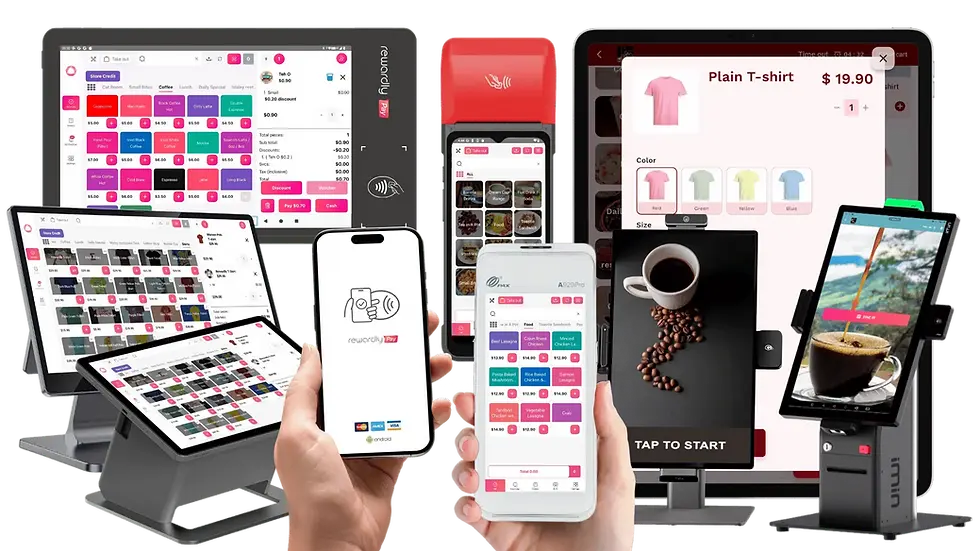
Using Rewardly CommerceOS, a merchant like Kohpan can run a highly efficient order-to-fulfilment workflow across pre-orders and pickup operations, while Rewardly LoyaltyOS supports ongoing customer engagement and repeat business. That combination fits naturally with the strengths of a vertically focused micro brand: fewer moving parts, clearer demand signals, and a stronger connection with loyal customers. (rewardly.sg)
This is an important point. Technology is not only for large chains. In many cases, it is even more valuable for micro brands because it helps them preserve their agility while improving consistency.
My View: Singapore F&B is Moving into a Proof-First Era
The rise of home-based and micro F&B brands is not just a temporary social media trend. It reflects a deeper structural change in how food businesses are launched and grown in Singapore.
The older model was often:
Open a shop first, then try to build demand.
The newer model is increasingly:
Prove demand first, then scale carefully.
Kohpan is a strong symbol of that shift. It started as a micro bakery, built interest through a tightly defined product and quality focus, developed a following, and then expanded. That path is becoming more logical in a market where physical overheads are rising and customers reward niche excellence more quickly than generic scale.
So the takeaway is not that physical F&B is dead. It is that micro and home-based F&B now offer a smarter path for discovering product-market fit.
And the businesses most likely to win are not necessarily the biggest. They are often the ones that know exactly what they do, exactly who they serve, and exactly how to fulfil demand efficiently.
In today’s Singapore F&B market, hyper-focus is no longer a limitation. It is increasingly becoming a competitive advantage.


Comments